 | | 1. | ALA launches new strategic plan | | | | | ALA launches new strategic plan
We're excited to share the American Library Association's new Strategic Plan-a bold, forward-looking roadmap designed to strengthen our community, expand opportunities, and ensure our continued leadership in the library profession. This plan – developed by the Executive Board and approved by ALA Council – reflects your voice, your needs, and your future. It lays out clear priorities that will drive meaningful impact for our members, our industry, and the broader community we serve.
Evolving Board Practices As part of our recent strategic planning process, the ALA Executive Board was advised by our strategic planning firm to adopt a board meeting structure that aligns more closely with best practices in nonprofit governance. In recognition of the scope and complexity of ALA's legal, fiscal, and operational responsibilities, the Board will begin holding its meetings in Executive Session, followed by an immediate report to membership outlining key outcomes and decisions.
This adjustment-common among large, mission-driven associations-will support the Board's ability to more directly and comprehensively address its core responsibilities while maintaining clear, consistent communication with members. This practice will begin with the August 2025 Executive Board meeting.
What's Ahead: ✔ Workforce Development: Attract, train, and retain the next generation. ✔ Innovation & Technology: Help members thrive in a rapidly evolving landscape. ✔ Advocacy: Be the trusted voice advancing policies that protect and grow the industry. ✔ Community & Engagement: Build stronger connections and support systems for all.
How You Can Be Part of It: -
Read our new plan and vision for the future. -
Volunteer: Join us in this exciting new effort by volunteering on one of our committees and task forces. -
Join/Renew: This is the perfect time to join our association or renew your membership to ensure you're part of this movement, driving real change in our community. -
Invest in the association's future by making a donation to support these exciting new initiatives. -
Show up for our libraries when you share your library story and participate in championing your profession.
Together, we are stronger-and the future is bright! Our association is creating meaningful change, and I can't wait to see the difference we're going to make in the world. Join this movement and make a difference with us!
With appreciation, solidarity, and hope, Sam Helmick President, American Library Association
------------------------------
Sam Helmick
ALA President
------------------------------
| |
| 2. | Re: ALA launches new strategic plan | | | | | Here is an article about the history of ALA Strategic Plans from 2000-2025.
Phenix, Katharine. "Ripples and Rocks: Strategic Plans of the American Library Association 2000-2025." Public Library Quarterly 44.4 (2025): 384–411.
--Kathleen
Kathleen de la Peña McCook
Distinguished University Professor of Librarianship School of Information, University of South Florida
| |
| 3. | Patricia Gail Oyler--Librarians We Have Lost, Sesquicentennial Memories -1976-2026 | | | | | | Patricia Oyler passed away on June 10, 2025. Oyler taught in the Simmons University School of Library and Information Science (SLIS) for 36 years in the areas of media cataloging and classification, technical services, preservation management, automated systems, international librarianship, and management. "I adored Pat. She was one of a kind, a force of nature, and deeply committed to SLIS," says Daniel Joudrey, Professor and Director of Libraries and Librarianship Concentration. "I learned many things from Pat, but the importance of faculty service was one of the most valuable lessons for me. She set me on the right path as an engaged faculty member." Among the first graduates of the Simmons MBA degree, Oyler began teaching for SLIS in 1974. Throughout her career, she explored her interest in international librarianship. She brought that global perspective to her work at Simmons, leading a training program for Vietnamese librarians, which she did for over 12 years. In 2005, Simmons received a $1.8 million grant from The Atlantic Philanthropies to fund training these librarians for leadership roles, in an effort to build Vietnam's information technology infrastructure in a rapidly growing global economy. She oversaw the grant and facilitated the program, which involved Vietnamese librarians spending a semester in Boston taking classes at SLIS (the students also studied at the Mortenson Center for International Library Programs at the University of Illinois, Urbana-Champaign). In recognition of this work, Oyler received the 2009 ALA International Relations Committee's John Ames Humphry/OCLC/Forest Press Award. In 2013, the Vietnam Ministry of Science and Technology awarded her Vietnam's Medal for Science and Technology. Oyler's big personality and distinctive voice will be remembered by many colleagues and alumnae/i. "Pat was bigger than life," says Professor and Dean Emerita Michèle Cloonan. "Flying with her to Vietnam and then watching her former students welcome her with hugs and gifts was heartwarming." Cloonan also traveled with Oyler to the Middle East, and describes her as an intrepid traveler. "I love how devoted she was to her students. We once team-taught a course and there was never a dull moment in class." The impact of her work and demeanor continues to be felt at Simmons SLIS. "There will never be another like Pat Oyler," says Joudrey.
-------------------------------------------------------------------------------------------------------------------- In honor of the Sesquicentennial next year (150th Anniversary of ALA) in 2026, the Library History Round Table is hosting Librarians We Have Lost, Sesquicentennial Memories -1976-2026. This collage of tributes seeks to honor librarians who died between 1976-2026. The tributes are published to ALA Connect and a digital memorial on LHRT News & Notes. We invite tributes from anyone about any library worker who passed away between 1976-2026. To submit a tribute, please use the form at lhrt.news/... For questions or comments, please reach out to Dr. McCook (kmccook@usf.edu) or Brett Spencer (dbs21@psu.edu).
------------------------------
Brett Spencer
Reference Librarian
Thun Library, Penn State Berks
He/Him/His
------------------------------
| |
| 4. | Lynn C. Hattendorf Westney - Librarians We Have Lost-Sesquicentennial Memories -1976-2026. | | | | | 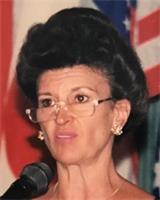 Lynn Carol (Hattendorf) Westney (1947- 2021). Born December 24, 1947 in Chicago IL to Joseph and Alma (Stankovitch) Tvrdik. Until 1980 her name was Lynn Carol Tvrdik. I met Lynn in 1972 at the University of Chicago, Graduate Library School. We were friends the rest of her life. In June 1980, Lynn married William Homer Hattendorf, II, who preceded her in death in 1995. In August 1997, she married Robert J. Westney, who preceded her in death in 2014. The true breadth of Lynn's scholarship has been obscured by her frequent surname changes-a problem faced by many female academics. Over her lifetime, she published under at least four different surnames: Tvrdik, Hattendorf, and Westney, both singularly and in combination (e.g., Lynn C. Hattendorf, Lynn C. Westney, Lynn C. H. Westney, Lynn Hattendorf Westney). Lynn earned the BA in Sociology from Loyola University in Chicago and the MS in Library and Information Science from the University of Illinois at Champaign. Lynn enjoyed a 25-year career at the University of Illinois at Chicago where she was a reference librarian and Associate Professor and Coordinator of Reference Collection Development. She was a member of the American Library Association, active in the Business Reference and Services Section (BRASS); the Illinois Library Association, the American Names Society and the Canadian Society for the Study of Names. She received the Reference Services Press Award from RUSA in 1989 for the outstanding article published in RUSQ (previously RQ). Lynn was Editor of the Educational Rankings Annual from 1991-2006., She also wrote five annual assessments of ranking methodologies for RQ. Lynn wrote numerous scholarly papers, many of which she presented as a guest speaker in a variety of international locations, including Australia, Canada, Costa Rica, Switzerland, Thailand, and the United States. Through most of her career, Lynn devoted much of her scholarship to celebrating the rewards of digitization without losing sight of the librarian's academic responsibilities regarding this (then) new information technology. Lynn also served as the editor of a regular column on e-journals, "E-Journals-Inside and Out," for JAHC: Journal of the Association for History and Computing. The column focused on freely accessible e-journals, e-newsletters, and other electronic publications relevant to history, computing, and interdisciplinary research. The column began in April 1999 as a collaborative effort with Ryan Johnson and continued under Westney's sole editorship from May 2002 until August 2008. In addition to her scholarship in librarianship Lynn was also an avid reader of onomastic sciences. She was a long-time member of both the Canadian Society for the Study of Names and the American Name Society. In 2007, she published an article for NAMES that provided an in-depth history of culinary names inspired by famous women: "From Courtesans to Queens: Recipes Named for Women."The article was featured in a 2007 special issue of NAMESdevoted entirely to women's names and naming practices. Her 2008 article, "Dew Drop Inn and Lettuce Entertain You: Onomastic Sobriquets in the Food and Beverage Industry" was published and commented upon internationally and was recently referenced in 2025 on Hub Pages. Selected Publications: Westney, Lynn C. Hattendorf. 2015. "Mutually Exclusive?" In Digital Scholarship in the Tenure, Promotion, and Review Process, 30–41. Journal of History and Computing, Columnist- "E-Journals Inside and Out." 1999-2008. Westney, Lynn C. "Intrinsic Value and the Permanent Record: The Preservation Conundrum." OCLC systems & services 23.1 (2007): 5–12. Westney, Lynn C. "Conspicuous by Their Absence: Academic Librarians in the Engaged University." Reference and user services quarterly 45.3 (2006): 200–203. Westney, Lynn. "From Courtesans to Queens: Recipes Named for Women." Names 55.3 (2007): 277–285. Hattendorf Westney, L.C. (2000), "A trivial pursuit? Information technology and the tenure track", Campus-Wide Information Systems.. 17 No. 4, pp. 113-119. Westney, Lynn C. Hattendorf. "'Proceedings of the XIXth International Congress of Onomastic Sciences'. Ed. W.F.H. Nicolaisen ." Names 1998: 307. Hattendorf, Lynn C. Educational Rankings of Higher Education: Fact or Fiction? Paper presented at the International Conference on Assessing Quality in Higher Education (8th, Queensland, Australia, July 15, 1996). ERIC-ED 401 785. Hattendorf, Lynn C. 1991. Educational Rankings Annual 1991 - 2006, (annual) 1500 Rankings and Lists on Education, Compiled from Educational and General Interest Published Sources. Detroit: Gale Research. Hattendorf, Lynn C. "College and University Rankings: An Annotated Bibliography of Analysis, Criticism, and Evaluation." RQ 25.3 (1986): 332–347. Hattendorf, Lynn C. "College and University Rankings: Part 2-An Annotated Bibliography of Analysis, Criticism, and Evaluation." RQ 26.3 (1987): 315–322. Hattendorf, Lynn C. "College and University Rankings: Part 3-An Annotated Bibliography of Analysis, Criticism, and Evaluation." RQ 27.3 (1988): 337–357. Hattendorf, Lynn C. "College and University Rankings: Part 4-An Annotated Bibliography of Analysis, Criticism, and Evaluation." RQ 28.3 (1989): 340–367. Hattendorf, Lynn C. "College and University Rankings: Part 5-An Annotated Bibliography of Analysis, Criticism, and Evaluation." RQ 29.3 (1990): 402–420. Hattendorf, Lynn C. The Art of Reference Collection Development. RQ, v29 n2 p219-29 Win 1989. Sources: In Memoriam: Lynn C. Westney. by I. M. Nick (Germanic Society for Forensic Linguistics) Names: A Journal of Onomastics 69 (Spring 2021). Obituary: Lynn C. Westney
------------------------------
Kathleen de la Peña McCook
Distinguished University Professor
School of Information
University of South Florida
------------------------------
| |
| 5. | Re: Article by professor of Holocaust & genocide studies | | | | | | Frieda, thank you for sharing this compelling and deeply relevant article. We as librarians cannot afford to neglect our moral mandate to speak out against this ongoing genocide. History will remember where we all stood, and I am glad to stand in solidarity together.
------------------------------
Mads Kerlan, MLIS
they/he
News Editor
Journal of Intellectual Freedom & Privacy
------------------------------
| |
| 6. | Re: Article by professor of Holocaust & genocide studies | | | | | | Whether you agree that Israel is committing a genocide or not (they are), or if you want to go with they are simply committing countless war crimes, what ALA has acknowledged, what isn't up for debate anywhere on earth, is that Israel has obliterated cultural institutions in all forms in Gaza and that we have a moral obligation as a profession to speak out against it. That's why this post is relevant on Connect.
------------------------------
Matthew Noe
Lead Collection and Knowledge Management Librarian
Countway Library
matthew_noe@hms.harvard.edu | @NoetheMatt
------------------------------
| |
| 8. | Re: Article by professor of Holocaust & genocide studies | | | | | | This article, "The Weaponization of Feminism in a Time of Genocide: A Response to Masha Gessen" by Sherene H. Razack, may also be of interest here: www.tandfonline.com/doi/full/10.1080/... A particularly poignant excerpt: "Race determines who we must care about, who we must believe, and whose injuries count
the most. When feminists are scripted as social actors who should care the most or only about
sexual violence, we are consigned to a political field where the women we should care about,
women who are sexually violated, are stripped of any other aspect of their history. The formula
emerging out of this single axis and inescapably racist explanation about the meaning of gender
and gender violence leaves other parts of women's lives in the shadows. Women whose lives
are profoundly shaped by, for example, colonial dispossession, are simply outside of, or on the
margins of, this universal category; they are outside the category of gender altogether. Such
women disappear as women, and hence, as legitimate subjects for feminists to care about.
The focus on mass rapes allegedly committed by Hamas on October 7 leaves feminist
politics mired in racial politics. When feminists consider sexual violence without attending
to the context in which narratives of sexual violence emerge and are circulated, we become
complicitous in genocide. Masha Gessen's essay on the weaponization of sexual violence in
war provides an illustration of how a story about sexual violence travels along racist rails and
gives birth to a storyline about civilized Europeans-in this case Jews-forced to use genocidal
force to defend their homeland from marauding, brutal, and misogynist Arabs. We should
remember that, just as it takes sexualized torture and terror to commit a genocide, it likewise
takes a tale of civilizational superiority to maintain entitlement to stolen land, and that a story
about gender is always crucial in the telling."
------------------------------
Mads Kerlan, MLIS
they/he
News Editor
Journal of Intellectual Freedom & Privacy
------------------------------
| |
| 9. | Re: Article by professor of Holocaust & genocide studies | | | | | As the person who posted the original article from Professor Omer Bartov in this email thread, I think a principled stance requires condemning the violations of human rights, including sexual violence and rape by any party. As a Middle Eastern feminist, I have written about the issue of sexual violence in the Middle East and will be happy to share my writings and other relevant articles/books with anyone who wishes to contact me off the list.
Best, Frieda Afary
| |
| 10. | Re: Carbon offsets post 3: Know where your money's going | | | | | | Hello Andrew, The article references a lengthy paper, Quality Assessment of REDD+ Carbon Credit Projects, which examines suspect cases in which paid advisors are used to assess Reducing Emissions from Deforestation and Forest Degradation (REDD+) carbon offsets. The authors specifically studied carbon-offset projects in tropical rain forests located in the global south and which "focus on changing the behavior of some of the world's poorest communities." None of the projects I referenced, including those offered by ALA's carbon offset partner, Native, fit this profile even remotely. To avoid the worst predictions for our planet, we need to stop emitting carbon and remove vast quantities of carbon from our atmosphere. Carbon capture is an expensive joke bankrolled by the kinds of companies that buy inflated REDD+ carbon offsets. In contrast, there are hundreds of carbon offset projects that are legitimate, locally derived and driven, and environmentally and socially just.
------------------------------
Larissa Brookes she/her
Head of Reference and Technology Services
Fort Lee Public Library
Fort Lee, NJ
larissa.brookes@fortlee.bccls.org
SustainRT Public Awareness and Advocacy Committee, chair
------------------------------
| |
| |